
Indoor cats often live long, healthy lives, but without the natural hunting, climbing, and patrolling that outdoor life demands, they can drift toward laziness. If you have been searching for ways to encourage indoor cats to exercise, the good news is that you don’t need expensive equipment or hours of free time. A few short, well-timed play sessions and some smart changes to your home can turn a couch potato into a leaping, pouncing predator again.
Key Takeaways
- Two or three 10–15 minute play sessions per day is enough for most adult cats.
- Cats are sprinters, not joggers: brief bursts of intense play beat long, gentle ones.
- Rotate toys weekly so novelty does the work for you.
- Feed part of the daily ration from puzzle feeders or scatter it for foraging.
- Vertical space (cat trees, shelves) encourages climbing and burns more calories than floor play alone.
- Stop play if your cat pants, limps, or hides — that signals overexertion or pain.
Why Indoor Cats Slow Down
Indoor cats conserve energy because nothing forces them to spend it. Food appears in a bowl, the temperature never drops, and there’s no prey to stalk. That’s comfortable, but it works against their biology. Cats are crepuscular hunters — wired for short, intense bursts of activity at dawn and dusk — and they’re built to move in sprints rather than long, steady exercise.
The result is a cat that sleeps 12–16 hours a day and gains weight quietly. The fix isn’t a gym membership; it’s making movement feel like hunting again.
Match Play to Your Cat’s Hunting Style
Not every cat wants the same game. Watch how yours stalks, and copy it.
The Stalker and Pouncer
These cats freeze, wiggle, then explode. Use a wand toy with feathers or a fuzzy mouse, drag it slowly behind furniture, then jerk it away. Let them catch it — a hunt with no kill is frustrating.
The Chaser
Some cats just want to run. A laser pointer or a toy dragged in fast figure-eights across the floor works well. Always finish by landing the laser on a real toy or treat so the chase has a payoff.
The Ambusher
These cats hide and swat. Toss a crinkle ball or a small plush toy past their hiding spot and let them bat it out. Repeat from different angles.
Pro Tip: End every session with a successful catch, then feed a small meal or treat. This mimics the natural hunt-eat-groom-sleep cycle and makes play more satisfying.
A Simple Daily Play Schedule
Consistency matters more than duration. This schedule suits most healthy adult cats.
| Time of Day | Activity | Duration |
|---|---|---|
| Early morning | Wand toy chase | 10 minutes |
| Midday | Puzzle feeder or scatter feed | 5–10 minutes |
| Evening | Active play, then dinner | 10–15 minutes |
| Before bed | Calm toy or treat hunt | 5 minutes |
Kittens and young cats may want more; seniors and cats with health conditions may need less. Adjust to your cat, not the clock.
Toys That Actually Get Cats Moving

You don’t need a closet full of gadgets. A small, rotating collection works better because novelty drives interest.
- Wand toys with interchangeable lures (Da Bird-style) — best all-rounder.
- Laser pointers — great for chasers, but always pair with a catchable toy.
- Puzzle feeders (PetSafe, Trixie, Catit) — turn meals into work.
- Crinkle balls and mylar springs — cheap, easy to bat and chase.
- Cat tunnels — ambush and sprint zones.
- Motorized toys (Hexbug Mouse, automatic laser towers) — useful when you’re busy.
Rotate three or four toys at a time and put the rest away. Bring them back in a week and they feel new again.
Turn Your Home Into a Gym
Environmental changes let your cat exercise without you. This is where vertical space pays off.
Climbing and Perching
Cat trees, wall shelves, and window perches encourage jumping and climbing. Place them near windows so your cat has something to watch — birdwatching alone can trigger tail-chasing and pouncing.
Foraging and Food Puzzles
Replace the bowl with a snuffle mat, a rolling kibble ball, or a few small bowls hidden around the house. Your cat walks, sniffs, and problem-solves for every meal.
Obstacle Courses
Line up boxes, tunnels, and stools into a simple course. Toss a toy or treat through it and let your cat navigate. Rearrange it weekly.
Warning: Never place high shelves where a fall could land on a hot stove, a stairwell, or fragile glass. Secure tall cat trees to the wall.
Make Playtime a Routine
Cats thrive on predictability. If play happens at the same times each day, your cat will start showing up ready to hunt. Pair sessions with cues — shake a treat bag, tap the wand on the floor — so the signal alone gets them moving.
Keep sessions short. A tired cat that walks away mid-game is fine; a bored cat that ignores you is not. If interest drops, switch toys or move to a new room.
Troubleshooting a Reluctant Cat
Some cats need coaxing. Try these fixes before assuming your cat won’t play.
| Problem | Likely Cause | Fix |
|---|---|---|
| Ignores the wand | Toy too fast or too predictable | Slow it down, hide it, pause |
| Plays for 30 seconds | Session too long | Shorten to 5 minutes, more often |
| Only plays at night | Natural crepuscular rhythm | Schedule play at dusk |
| Hides when toys appear | Fear or overstimulation | Use quieter toys, dim lights |
| Panting or limping | Possible health issue | Stop and call your vet |
If your cat suddenly stops playing, hides, or shows pain, that’s a veterinary conversation, not a training problem.
Exercise for Senior and Overweight Cats
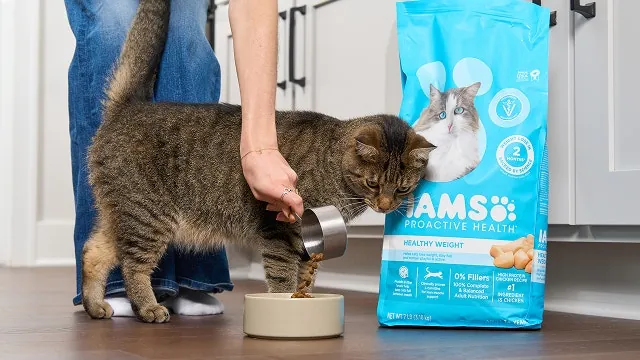
Older and heavier cats still need movement, just gentler. Start with two-minute sessions and build slowly. Use food puzzles at floor level, place water bowls upstairs, and encourage short walks to a favorite sunny spot rather than big jumps.
Pro Tip: Weigh your cat monthly on a kitchen scale. A slow, steady loss of about 1–2% of body weight per week is a safe target for most overweight cats — but confirm the plan with your veterinarian first.
Frequently Asked Questions
How much exercise does an indoor cat need daily?
Most healthy adult cats do well with 20–30 minutes of active play spread across two or three sessions. Kittens and young cats often want more, while seniors may need shorter, gentler bursts. The goal is daily movement, not a single long workout.
What if my cat won’t play with toys at all?
Try food-based enrichment instead. Puzzle feeders, snuffle mats, and scattered kibble make your cat move without needing a toy. Some cats also respond to a second cat as a playmate, though introductions should be gradual.
Is a laser pointer bad for cats?
A laser is fine as part of play, but it can cause frustration because the “prey” is never caught. Always finish by landing the beam on a real toy or treat so your cat gets a satisfying catch.
Can I exercise my cat without buying anything?
Yes. Cardboard boxes, paper bags (handles removed), crumpled foil balls, and hiding treats around the house all work. Stairs and hallways make natural sprint tracks.
How do I know if my cat is getting enough exercise?
A healthy cat is alert, maintains a stable weight, and shows interest in play. If your cat is gaining weight, sleeping constantly, or avoiding movement, increase session frequency and check with your vet.
Do cat wheels actually work?
Some cats use them enthusiastically; many ignore them. They can help high-energy breeds like Bengals and Savannahs, but they aren’t a substitute for interactive play and cost $200–$400. Try before you buy if possible.
When to Check With Your Vet
Sudden reluctance to move, limping, heavy breathing, or a sharp change in appetite can signal arthritis, heart disease, or dental pain — all of which make exercise harder. A yearly exam and a body-condition check give you a baseline. If your cat is overweight, ask your vet for a safe target weight before starting any new routine.
Start tonight with one ten-minute wand session before dinner, then hide a few kibble around the room instead of using the bowl. That single change, repeated daily, is often enough to wake up a sluggish indoor cat and keep them moving for years.
